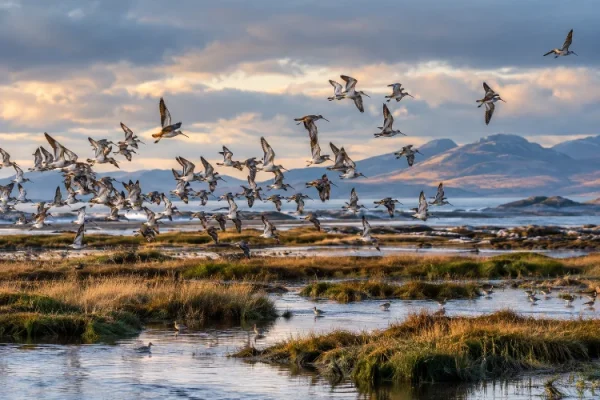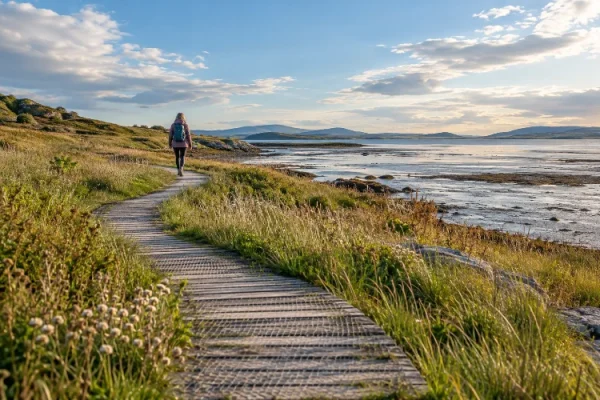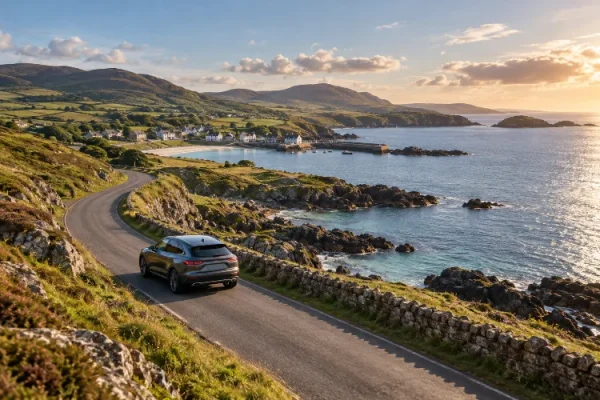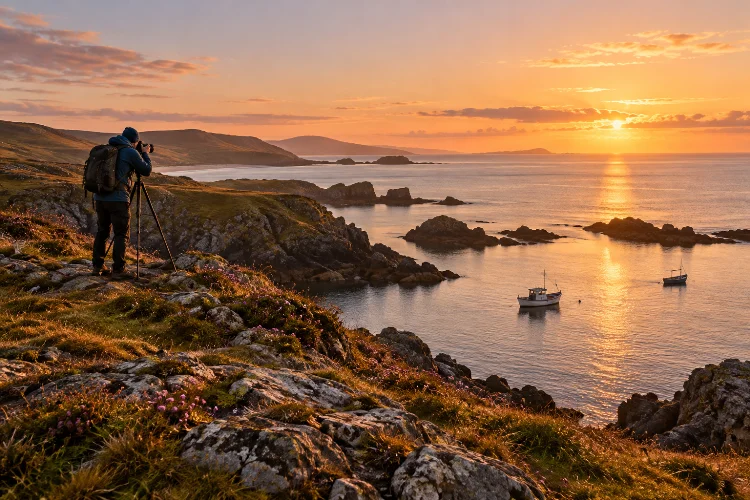
Imagine standing on a quiet Scottish coastline just as the sun begins to rise. The sea reflects soft golden colours, fishing boats gently move in the harbour, and dramatic cliffs stretch towards the horizon.
You’ve got your camera ready, the lighting looks incredible, and there’s barely another person around.
Sounds like a photographer’s dream, right?
That’s exactly why designing coastal photography trips around the Galloway region can be such a rewarding experience.
Located in southwest Scotland, Galloway offers a beautiful mixture of rugged cliffs, peaceful beaches, colourful harbour villages, historic lighthouses, and changing coastal landscapes.
Unlike some of Scotland’s more famous photography destinations, this region still offers plenty of opportunities to capture natural scenery without constantly competing with crowds.
Whether you’re an experienced landscape photographer or someone who simply enjoys taking beautiful travel pictures, there’s something here for every skill level.
However, getting memorable coastal photographs involves more than arriving with a camera and hoping for good weather.
You need to understand lighting, tides, seasonal conditions, location planning, and the small creative decisions that turn ordinary snapshots into remarkable images.
This guide explains how to plan a Galloway photography adventure that’s both enjoyable and productive.
Why Galloway Is a Fantastic Destination for Coastal Photography
Scotland has no shortage of spectacular landscapes, but Galloway offers a particularly interesting combination of scenery and accessibility.
Within a relatively manageable journey, photographers can move between dramatic headlands, sheltered estuaries, traditional fishing communities, and quiet sandy beaches.
A Wide Variety of Coastal Landscapes
One of Galloway’s greatest advantages is its visual diversity.
The western coastline around the Rhins of Galloway features rocky cliffs and exposed headlands, while the Solway Coast offers expansive tidal landscapes, beaches, and sheltered bays.
This variety allows photographers to experiment with different styles without travelling across the entire country.
You might capture crashing waves in the morning, photograph a historic harbour in the afternoon, and finish the day with a peaceful sunset composition.
Fewer Crowds and More Creative Freedom
Popular Scottish photography locations can become extremely busy, particularly during the summer.
Although Galloway has well-known attractions, many smaller coastal destinations provide a quieter atmosphere.
This can make it easier to experiment with compositions, wait for the right lighting, and explore different viewpoints.
The region is also connected by the South West Coastal 300 touring route, which covers approximately 300 miles through Dumfries and Galloway and South Ayrshire.
You don’t need to complete the entire circuit, but it provides a useful starting point for building a coastal photography itinerary.
Best Coastal Photography Locations Around Galloway
Choosing the right locations is probably the most exciting part of planning your trip.
Fortunately, Galloway offers plenty of places where natural scenery, interesting architecture, and changing light combine beautifully.
Portpatrick: Colourful Harbour Photography
Portpatrick is a picturesque fishing village on the western side of the Rhins of Galloway peninsula.
Its colourful waterfront buildings, traditional harbour walls, and rocky surroundings make it particularly attractive for travel and landscape photography.
The village is especially interesting during the late afternoon and evening, when soft light can illuminate the harbour and surrounding buildings.
Try photographing the waterfront from different positions rather than relying on one obvious viewpoint.
A wide-angle lens can capture the entire harbour, while a longer focal length helps isolate fishing boats, reflections, and architectural details.
If the water is calm, experiment with symmetrical compositions that use the reflections of buildings.
Mull of Galloway: Dramatic Cliffs and Lighthouse Views
For photographers who love dramatic landscapes, the Mull of Galloway is difficult to beat.
Located at Scotland’s southernmost point, this spectacular headland combines steep sea cliffs, open water, coastal wildlife, and the famous Mull of Galloway Lighthouse.
The lighthouse was first illuminated in 1830 and remains one of the area’s most recognisable landmarks.
Photographers can create striking compositions by including the lighthouse against an expansive sky.
Alternatively, focus on the textures of the cliffs and the movement of waves below.
The surrounding RSPB nature reserve is also home to seabirds, including guillemots, razorbills, and kittiwakes.
A telephoto lens can be useful for photographing wildlife from a respectful distance.
Isle of Whithorn: Traditional Maritime Atmosphere
The Isle of Whithorn offers a completely different photography experience.
This small harbour village on the Machars peninsula has a peaceful atmosphere, historic buildings, and attractive waterfront scenery.
Its maritime heritage provides opportunities for documentary-style images as well as traditional landscape photography.
Look for fishing equipment, harbour walls, boats, and weathered architectural details.
These smaller subjects can help communicate the character of the community.
On cloudy days, the soft, even light can be particularly suitable for photographing textures and architectural features.
Kirkcudbright: Coastal Culture and Colourful Streets
Kirkcudbright is widely recognised for its artistic heritage and colourful townscape.
The historic harbour on the River Dee has been an important part of the community for centuries.
Today, photographers can capture a mixture of working waterfront scenes, colourful buildings, and traditional Scottish streets.
The town is particularly suitable for photographers who enjoy combining travel photography with landscape compositions.
Spend some time exploring beyond the main harbour.
Interesting doorways, reflections, boats, and everyday street scenes can provide surprisingly memorable photographs.
Rockcliffe: Peaceful Bays and Natural Textures
Rockcliffe is a beautiful coastal destination near Dalbeattie, overlooking the Solway Firth.
Managed in part by the National Trust for Scotland, the area features woodland, coastal paths, wildflower meadows, and attractive shoreline scenery.
It’s an excellent location for photographing peaceful landscapes and the relationship between land and sea.
During low tide, exposed sand and mud create interesting shapes and patterns.
At higher water levels, the bay can produce softer reflections and more balanced coastal compositions.
Nearby Rough Island is a protected bird sanctuary accessed by a tidal causeway, but visitors must respect seasonal restrictions.
Sandyhills Beach: Open Space and Minimalist Landscapes
Sandyhills Beach offers wide stretches of sand and beautiful views across the Solway coastline.
The beach is particularly attractive at low tide, when the exposed shoreline creates opportunities for minimalist photography.
Instead of filling every frame with objects, experiment with open space.
A single rock, distant figure, or reflection can become a powerful focal point against the surrounding landscape.
Sandyhills is also a useful location for capturing patterns left by receding water.
Just remember that the best composition doesn’t always require walking farther across the exposed beach.
Understanding Light, Weather, and Tides for Better Photos
The difference between an average coastal photograph and an impressive one often comes down to timing.
Even the most beautiful destination can look completely different depending on the weather and the position of the sun.
Make the Most of Golden Hour
Golden hour generally occurs shortly after sunrise and before sunset, when sunlight travels through more of the atmosphere and produces warmer, softer illumination.
This lighting can enhance coastal textures, create attractive shadows, and give buildings a natural glow.
Western-facing viewpoints around Portpatrick may be especially rewarding during suitable evening conditions.
However, sunrise and sunset directions change throughout the year.
Use a sun-position planning app to understand where light will fall at your chosen location.
Arriving at least 30 minutes before your intended shooting time allows you to explore compositions without rushing.
Don’t Ignore Cloudy and Moody Weather
You don’t need perfect sunshine to capture beautiful coastal images.
In fact, overcast conditions often create wonderful opportunities for dramatic landscape photography.
Dark clouds can provide atmosphere, while soft diffused light helps preserve detail in rocks, boats, and buildings.
After rainfall, wet surfaces may produce attractive reflections and richer colours.
Occassionally, a small break in the clouds creates a brief moment of extraordinary lighting.
Be prepared to work quickly when those opportunities appear.
Check the Tides Before Every Coastal Shoot
Tides can completely transform coastal scenery.
At low tide, beaches may reveal rock formations, sand patterns, and exposed sections of shoreline.
At high tide, water can surround coastal features, produce reflections, and create different visual relationships between the land and sea.
Neither condition is automatically better for photography.
It depends on the composition you’re trying to achieve.
Always use reliable local tide predictions and understand the difference between high-water and low-water times.
Never enter tidal areas without knowing how you’ll return safely.
Creating a Flexible Four-Day Galloway Photography Itinerary
A carefully organised itinerary helps photographers spend more time taking pictures and less time deciding where to drive next.
However, flexibility is essential because coastal weather rarely follows a perfect schedule.
Day 1: Portpatrick Harbour and Coastal Details
Begin your journey in Portpatrick.
Spend the morning exploring the village, photographing harbour details, waterfront buildings, and everyday coastal scenes.
Use the afternoon to identify your favourite compositions and experiment with different focal lengths.
Return to your chosen viewpoint during the evening if the light looks promising.
Staying locally allows you to photograph the harbour without worrying about a long drive afterward.
Day 2: Mull of Galloway and the Western Headlands
Dedicate your second day to the Mull of Galloway.
The lighthouse, cliffs, and surrounding nature reserve provide plenty of subjects for a full photography session.
Start with wide landscape compositions before switching to detailed shots of coastal textures and distant seabirds.
Bring a longer lens if wildlife photography interests you.
If conditions are windy, avoid exposed areas and concentrate on viewpoints that can be accessed safely.
A slower pace will help you explore the location more thoughtfully.
Day 3: Isle of Whithorn and Kirkcudbright
Travel east towards the Isle of Whithorn for a morning of harbour and documentary photography.
Focus on details that communicate the village’s maritime character.
Later, continue towards Kirkcudbright, allowing sufficient time for the journey and unplanned stops.
Spend the afternoon exploring its colourful streets and historic waterfront.
This combination provides a nice contrast between traditional coastal village photography and architectural subjects.
Day 4: Rockcliffe and Sandyhills Beach
Finish your trip along the Solway Coast.
Begin at Rockcliffe, where you can photograph sheltered coastal scenery, woodland details, and peaceful shoreline views.
Continue towards Sandyhills Beach when tide and weather conditions suit your plans.
Experiment with minimalist compositions, wide-angle landscapes, and patterns in the sand.
If the light looks especially attractive, stay a little longer rather than rushing towards another destination.
Some of the best photographs happen when you give yourself time to observe.
Essential Camera Equipment and Photography Techniques
You don’t need the most expensive camera equipment to capture beautiful images of Galloway.
However, bringing the right gear can make photography easier, particularly when dealing with unpredictable coastal conditions.
Choose Versatile Camera Lenses
A wide-angle lens is useful for capturing expansive beaches, dramatic skies, and impressive coastal cliffs.
Something around 16–35mm on a full-frame camera provides plenty of flexibility.
A standard zoom, such as a 24–70mm lens, works well for harbour scenes, architectural details, and general travel photography.
If wildlife is a priority, a telephoto lens allows you to photograph distant birds without approaching sensitive habitats.
Don’t feel pressured to carry every lens you own.
Two versatile lenses are often more practical than an overloaded camera bag.
Experiment With Shutter Speed
Shutter speed plays a major role in how moving water appears in photographs.
A fast shutter speed, such as 1/1000 second, can help freeze splashing waves.
Longer exposures can create smooth, flowing water effects.
For example, a one- to three-second exposure may soften wave movement, depending on the conditions.
A sturdy tripod is essential for keeping the camera stable during longer exposures.
An ND filter can help reduce incoming light when shooting long exposures during daylight.
Protect Your Equipment From Coastal Conditions
Salt spray, moisture, sand, and wind can quickly create problems for photography equipment.
Bring a weather-resistant camera bag, a clean microfibre cloth, and suitable protective covers.
Avoid changing lenses when sand or salt spray is blowing around.
After returning from the coast, carefully clean equipment according to the manufacturer’s recommendations.
It’s also worth carrying spare batteries, memory cards, and a portable charger.
You definately don’t want to miss a spectacular sunset because your battery runs out.
Developing a Unique Coastal Photography Style
Visiting beautiful locations is important, but your creative approach determines whether your photographs feel personal.
Instead of copying familiar compositions, try exploring what makes each coastal destination distinctive.
Use Natural Leading Lines
Coastal environments contain plenty of natural leading lines.
Harbour walls, winding footpaths, shoreline curves, and patterns in the sand can guide the viewer’s attention through an image.
For example, positioning a curved harbour wall in the foreground can lead the eye towards distant buildings or boats.
Experiment with camera height and perspective to create different visual results.
Sometimes, lowering the camera slightly produces a stronger composition than shooting from eye level.
Include Foreground Interest
A photograph of the sea and sky can look beautiful, but adding foreground detail often makes the scene more engaging.
Rocks, shells, driftwood, and coastal vegetation can provide depth.
Try positioning an interesting object in the lower part of your frame while keeping the main landscape visible.
Be careful not to disturb wildlife habitats or move natural objects unnecessarily.
Good landscape photography should work with the environment rather than change it.
Tell a Story Through Multiple Images
Not every photograph needs to be a dramatic landscape.
A collection of smaller images can communicate the atmosphere of a destination more effectively.
Combine wide coastal views with details of fishing boats, traditional houses, harbour equipment, and changing weather.
For example, a Portpatrick photo series might include the entire harbour, a close-up of weathered ropes, and a quiet evening reflection.
These seperate images create a more complete visual story when viewed together.
Staying Safe and Travelling Responsibly
Coastal photography is incredibly rewarding, but it also comes with risks that shouldn’t be underestimated.
A great photograph is never worth putting yourself or other people in danger.
Respect Cliffs and Unpredictable Waves
Never stand close to unstable cliff edges or climb onto slippery rocks for a better angle.
Waves can be unpredictable, particularly during stormy conditions.
The RNLI recommends checking tides and weather conditions before visiting coastal environments.
If conditions become dangerous, move away from exposed shoreline areas.
There will always be another opportunity to photograph the landscape.
Protect Wildlife and Restricted Areas
Wildlife photography requires patience and responsible behaviour.
At the Mull of Galloway, use suitable lenses to photograph seabirds without disturbing nesting colonies.
Rockcliffe’s Rough Island is particularly sensitive during the breeding season.
The National Trust for Scotland states that Rough Island is not accessible from May through July to protect breeding birds.
Always follow current local signage and conservation guidance.
Photographers using drones should also check Civil Aviation Authority rules, airspace restrictions, landowner requirements, and wildlife protection regulations before flying.
Plan Accommodation Around Photography Sessions
Accommodation location matters more than many photographers realise.
Staying close to your preferred shooting locations makes early mornings and late evenings much easier.
Portpatrick and Stranraer can provide convenient bases for western coastal photography.
Kirkcudbright or the Dalbeattie area may be more practical for exploring the Solway Coast.
Consider spending two nights in each area rather than returning to one distant accommodation base every evening.
It’s also worth choosing somewhere with enough room to dry clothing, charge batteries, and organise equipment.
With the right preparation, you’ll recieve more opportunities to concentrate on photography rather than logistics.
Designing coastal photography trips around the Galloway region is about more than finding beautiful viewpoints.
It’s about understanding the landscape, working with natural light, respecting the coastline, and allowing enough time to discover unexpected photographic opportunities.
From Portpatrick’s colourful harbour to the dramatic Mull of Galloway and the peaceful beaches around Rockcliffe, this corner of Scotland offers remarkable creative potential.
Whether you’re shooting with a professional camera or a smartphone, thoughtful planning can make every photography session more rewarding.
Ready to capture Galloway through your own lens?
Choose your favourite coastal locations, check the weather and tide conditions, and start building a flexible photography itinerary.
The next unforgettable image might be waiting just around the corner.