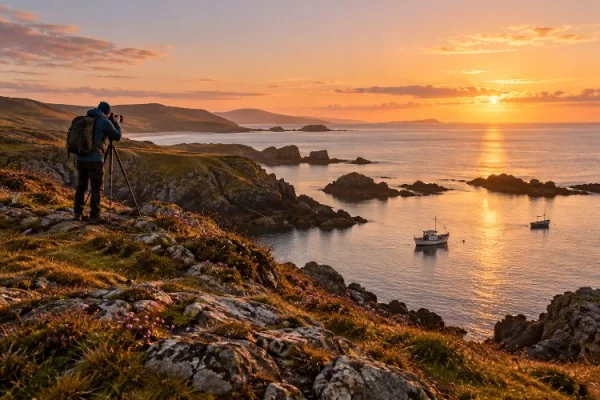
Picture yourself standing along a quiet Scottish coastline, watching seabirds glide across the sky while the tide slowly reveals enormous stretches of shimmering sand and mudflats.
No crowded beaches, no noisy tourist attractions, and absolutely no rush.
Sounds like the perfect escape, right?
That’s exactly what makes exploring Wigtown Bay coastal landscapes from Creetown village such a rewarding experience.
Located in Dumfries and Galloway, southwest Scotland, Creetown is a charming former fishing village overlooking the River Cree estuary and the northern reaches of Wigtown Bay.
The surrounding coastline offers an interesting mixture of peaceful tidal landscapes, wildlife-rich wetlands, historic landmarks, and countryside scenery.
Unlike Scotland’s more famous coastal destinations, this part of Galloway feels refreshingly unhurried. You can spend hours watching the changing tides, discovering local history, or enjoying a leisurely countryside walk without constantly encountering large tourist crowds.
Whether you’re planning a weekend getaway, a caravan holiday, or a longer countryside retreat, Wigtown Bay provides plenty of opportunities to reconnect with nature.
Here’s everything you need to know about exploring this beautiful corner of Scotland.
1. Discovering Creetown: A Peaceful Gateway to Wigtown Bay
Creetown might not appear on every Scottish travel itinerary, but that’s part of its appeal.
This small village combines traditional character, fascinating history, and easy access to some of southwest Scotland’s most distinctive coastal scenery.
A Village Shaped by the Sea
Creetown was originally known as Ferrytown of Cree, reflecting its historical role as a crossing point over the River Cree estuary.
Travellers once crossed the water here while making pilgrimages towards the religious centre associated with St Ninian at Whithorn.
The village later developed industries connected with fishing and granite quarrying.
During the nineteenth century, stone from the surrounding quarries was transported for use in major construction projects, including developments around Liverpool’s docks.
Today, the village retains a quiet atmosphere that feels far removed from its industrial past.
Its traditional streets, nearby hills, and connection to the estuary create an appealing starting point for exploring Galloway’s coastal environment.
Why Creetown Makes an Excellent Holiday Base
One of Creetown’s biggest advantages is its location.
The village lies close to Wigtown Bay while providing road connections to Newton Stewart, Gatehouse of Fleet, and other destinations across Dumfries and Galloway.
This makes it particularly suitable for visitors who want coastal experiences without relocating their accommodation every night.
You could spend the morning exploring tidal scenery, return for lunch, and head towards woodland or upland landscapes later in the afternoon.
The pace is flexible, which is exactly what a relaxing Scottish getaway should offer.
And because Creetown isn’t dominated by major tourist attractions, the surrounding countryside can feel suprisingly peaceful.
2. Understanding the Unique Coastal Landscapes of Wigtown Bay
Wigtown Bay isn’t your typical destination filled with uninterrupted sandy beaches and beachfront cafés.
Its real beauty comes from something much more dynamic: an extensive estuarine environment continually reshaped by the tides.
Saltmarshes, Mudflats, and Tidal Channels
At the northern end of Wigtown Bay, rivers including the Cree and Bladnoch contribute to a landscape of intertidal flats, channels, and saltmarsh vegetation.
These environments may appear simple at first glance, but they’re incredibly important for coastal wildlife.
Saltmarsh plants are adapted to conditions where seawater regularly covers the ground, while muddy sediments support small invertebrates that provide food for birds.
As the tide retreats, broad areas of exposed sediment become visible.
When the water returns, the scenery changes again, creating reflections, shifting colours, and new patterns across the estuary.
It’s almost like visiting a different landscape depending on the time of day.
Wigtown Bay Local Nature Reserve
One of the most significant natural attractions in the area is Wigtown Bay Local Nature Reserve.
Recognised as Britain’s largest Local Nature Reserve, it protects an extensive landscape that supports wintering wildfowl, wading birds, and salt-tolerant plants.
For visitors, the reserve offers opportunities to observe an environment that remains closely connected to natural tidal processes.
Rather than expecting a conventional seaside experience, approach the area as a place for wildlife observation, landscape photography, and peaceful exploration.
A good pair of binoculars can make the experience even more enjoyable.
How the Tides Transform the Scenery
Timing matters considerably when visiting an estuary.
Low tide exposes larger sections of mudflat and sandflat, revealing winding drainage channels and the textures of the seabed.
Higher water creates a different atmosphere, with reflections and bird activity shifting as feeding areas become submerged.
However, exposed mudflats aren’t automatically safe walking surfaces.
Soft sediment, hidden channels, and rapidly changing water levels can make venturing away from established routes dangerous.
According to the Met Office, visitors should check tide times and heights every day because coastal conditions can change considerably.
For most travellers, the safest and most enjoyable approach is observing the landscape from marked paths, designated viewpoints, and established visitor facilities.
3. The Best Coastal Walks and Scenic Viewpoints Near Creetown
There’s no shortage of attractive scenery around Wigtown Bay.
The trick is choosing walks and viewpoints that suit your interests, fitness level, and available time.
Exploring the Countryside Around Creetown
Start your adventure by exploring the village and its immediate surroundings.
Creetown sits between the estuary and rising countryside, creating an interesting contrast between open coastal views and sheltered green hills.
Short local outings offer opportunities to appreciate traditional village architecture, woodland scenery, and glimpses towards the bay.
For longer walks, consult local route information and Ordnance Survey maps rather than assuming every shoreline track is publicly accessible or suitable for walking.
Some sections of the coast contain farmland, muddy ground, or roads without safe pedestrian access.
Taking time to choose established routes makes the experience much more enjoyable.
Visiting Carsluith Castle
A short drive south of Creetown brings you to Carsluith Castle, one of the area’s interesting historic landmarks.
According to Historic Environment Scotland, the castle stands approximately 3.5 miles south of the village along the A75.
The surviving tower house provides a fascinating reminder of the region’s medieval and early modern history.
Its well-preserved exterior, stonework, and surrounding landscape make it an appealing stop during a coastal sightseeing trip.
The castle’s exterior and grounds are open to visitors, although the interior is currently closed.
It’s worth remembering that the A75 is a major road, so driving to the site is generally a more appropriate option than attempting an informal roadside walk.
Wigtown Harbour and the Martyrs’ Stake
For another perspective on the estuary, consider visiting Wigtown Harbour.
Located across the River Cree system from Creetown, this area provides access to wildlife viewing opportunities and walking routes around the western side of the bay.
The nearby Martyrs’ Stake is connected with the history of two Covenanter women who were executed by drowning in 1685.
Today, the surrounding landscape is better known for its natural beauty and birdlife, although the historical significance remains an important part of the visitor experience.
Wigtown also has established walking routes connecting parts of the town, harbour, and saltmarsh surroundings.
Allow time for photography and quiet observation rather than rushing through the area.
4. Wildlife Watching Around Wigtown Bay
For nature enthusiasts, Wigtown Bay is a particularly rewarding destination.
Its wetlands provide feeding, roosting, and breeding habitats for different bird species throughout the year.
Discovering the Crook of Baldoon Nature Reserve
One of the area’s best-known wildlife destinations is RSPB Crook of Baldoon, situated near Wigtown.
The reserve contains saltmarsh, mudflats, wet grassland, and lagoon habitats, with the Galloway Hills forming a scenic background.
According to the RSPB, the reserve attracts thousands of wintering birds between December and March.
Pink-footed geese, barnacle geese, whooper swans, and various other waterbirds may be observed during suitable seasonal conditions.
In warmer months, visitors might encounter lapwings, skylarks, meadow pipits, and other species associated with grassland habitats.
The reserve also provides a viewing structure and a relatively short accessible path near its entrance.
However, visitors should check current accessibility information and remember that livestock may be grazing in certain areas.
Tips for a Successful Birdwatching Experience
You don’t need expensive equipment to enjoy birdwatching around Wigtown Bay.
Binoculars, comfortable outdoor clothing, and a little patience are often enough.
Bird activity can vary depending on the season, tide, weather, and time of day.
Rather than chasing specific sightings, find a suitable viewing position and observe how birds interact with the environment.
You might see geese gathering on the saltmarsh, smaller waders searching exposed sediment, or birds of prey hunting over surrounding grassland.
Wildlife is unpredictable, so sightings are never guaranteed.
Remember to maintain a respectful distance and avoid disturbing nesting or feeding birds, particularly during sensitive periods.
If you’re visiting with a dog, keep it under close control and follow local reserve guidance.
Watching wildlife quietly is not only better for the animals but also makes the experience considerably more rewarding.
5. Combining Coastal Exploration With Local History and Culture
The landscapes around Creetown are fascinating, but the surrounding communities have plenty of stories worth discovering too.
Combining outdoor activities with cultural attractions can make your trip feel more varied and memorable.
Exploring Creetown’s Heritage
Creetown’s history includes its former ferry connections, granite industry, and relationship with the wider Galloway landscape.
The village’s Gem Rock Museum adds another interesting dimension to a local visit.
Its collections focus on minerals, gemstones, and geological specimens, offering an alternative activity when the weather doesn’t cooperate with outdoor plans.
For families, combining coastal exploration with a museum visit can create a balanced day out.
Children can enjoy discovering natural landscapes outside before learning more about rocks and minerals indoors.
It’s a simple way to make a countryside holiday both enjoyable and educational.
Spending an Afternoon in Scotland’s National Book Town
Wigtown is also worth visiting for reasons beyond the nature reserve.
Designated Scotland’s National Book Town in 1998, it has developed a strong literary identity through independent bookshops and cultural events.
The town is particularly associated with the Wigtown Book Festival, which brings writers and readers together during its annual autumn programme.
Even outside festival dates, browsing the bookshops and enjoying a leisurely café visit can be a pleasant addition to your coastal itinerary.
There’s something especially relaxing about spending a morning outdoors and an afternoon discovering second-hand books.
For visitors staying several days around Wigtown Bay, cultural excursions like this help create a more rounded Scottish holiday experience.
6. Choosing the Best Season for Wigtown Bay Photography and Exploration
Every season gives Wigtown Bay a slightly different personality.
Your ideal travel dates depend on whether you’re interested in wildlife, photography, comfortable walking conditions, or simply enjoying quiet countryside surroundings.
Spring and Summer: Green Landscapes and Longer Days
Spring brings fresh countryside colours, emerging vegetation, and increasing daylight.
It’s a lovely time for walking, especially when surrounding fields and woodland begin to look greener.
Summer generally provides more daylight for longer excursions and photography sessions.
However, Scotland’s weather can remain changeable, even during warmer months.
Pack waterproof layers and be prepared to adjust plans when rain or strong winds arrive.
For landscape photographers, mornings and evenings can be particularly attractive because lower sunlight may create softer colours across the estuary.
Reflections on tidal water can also produce beautiful compositions, depending on cloud cover and water levels.
Autumn and Winter: Atmospheric Views and Migrating Birds
Autumn introduces richer colours across woodland and surrounding hills.
The changing vegetation creates an appealing contrast with the open coastal landscape.
Winter, meanwhile, can be especially interesting for birdwatchers because large numbers of wildfowl visit the bay and its neighbouring reserves.
Shorter days and colder conditions require additional preparation, but the quiet atmosphere can be part of the appeal.
Photography enthusiasts may enjoy dramatic clouds, soft winter light, and the movement of birds across the horizon.
You don’t definately need perfect sunshine to capture memorable coastal photographs.
Sometimes a moody Scottish sky makes the scenery even more impressive.
Simple Photography Tips
Try including elements such as grassland, traditional stone buildings, or winding tidal channels in your foreground.
These features can add depth and context to wider landscape images.
Avoid walking onto sensitive mudflats simply to find a better camera angle.
A zoom lens or telephoto setting allows you to capture wildlife from a safer distance while reducing unnecessary disturbance.
And don’t forget to look behind you occassionally.
Some of the most interesting photographs come from noticing unexpected patterns in the landscape rather than concentrating on the most obvious viewpoint.
7. Planning a Relaxed Coastal Itinerary From Creetown Village
You don’t need an elaborate schedule to enjoy Wigtown Bay.
In fact, the surrounding landscape is best appreciated when there’s enough flexibility to stop, explore, and change your plans.
A Simple Three-Day Coastal Escape
On your first day, focus on Creetown itself.
Explore the village, learn about its history, and enjoy nearby countryside views before visiting Carsluith Castle.
Keep the afternoon relatively relaxed so you have time to appreciate the scenery without constantly checking the clock.
The second day could focus on the western side of Wigtown Bay.
Visit Wigtown, explore suitable harbour-side walking routes, and spend time observing the estuarine environment.
If conditions are appropriate, continue to RSPB Crook of Baldoon for birdwatching and peaceful views across the wetlands.
On the third day, consider exploring Cairnsmore of Fleet National Nature Reserve.
Although it’s an upland rather than coastal destination, its landscapes provide a wonderful contrast to the open saltmarshes.
NatureScot describes several walking opportunities here, including the lower-level In-bye Trail and more demanding upland routes.
From Creetown, the Dromore Farm access route follows the B796 and connecting minor roads for approximately 11 kilometres.
This combination of coast, countryside, and local heritage creates a varied introduction to the region.
Practical Travel Advice
A car can be especially useful when exploring different sides of Wigtown Bay.
Although locations may appear close together across the estuary, reaching them often involves following roads around the river system.
Always check routes seperately before setting off, rather than estimating driving distances from a map of the coastline.
Pack suitable footwear, waterproof clothing, drinking water, and basic supplies for outdoor excursions.
Mobile coverage and access to facilities may vary in rural locations, so planning ahead is worthwhile.
Before approaching tidal areas, check the latest weather information and tide predictions.
Avoid crossing exposed mudflats or entering unfamiliar tidal channels, even when the landscape looks completely dry.
Enjoying the Coast Responsibly
Responsible tourism helps protect the environments that make Wigtown Bay special.
Stick to suitable access routes, take litter home, and follow any instructions displayed around nature reserves.
During bird breeding seasons, avoid disturbing nests or allowing pets to run through sensitive habitats.
Supporting small shops, cafés, and local attractions can also benefit the communities surrounding the bay.
Ultimately, the best coastal holiday isn’t about visiting as many attractions as possible.
It’s about appreciating the places you explore while leaving them in good condition for future visitors.
Exploring Wigtown Bay from Creetown offers a refreshing alternative to Scotland’s busier coastal destinations.
With its expansive tidal landscapes, protected wetlands, historic landmarks, and peaceful countryside, the area provides plenty of opportunities for visitors who appreciate nature and slower travel.
Creetown makes a practical base for discovering nearby attractions, while destinations such as Wigtown Harbour, Carsluith Castle, and Crook of Baldoon add variety to a coastal getaway.
The key is planning around local conditions, respecting wildlife habitats, and allowing enough time to enjoy the scenery.
Whether you’re interested in birdwatching, photography, walking, or local history, this corner of Dumfries and Galloway deserves a place on your travel list.
Ready to discover southwest Scotland’s quieter coastline? Start planning your Creetown escape and experience the changing landscapes of Wigtown Bay for yourself.